
The Season of Monumental Loss
First the ambulance, then the fire truck, then the police car.

“I became quietly seized with that nostalgia that overcomes you when you have reached the middle of your life and your father has recently died and it dawns on you that when he went he took some of you with him.”
—Bill Bryson
Our neighbor died last week. He lives across the street on a corner lot. His house doesn’t face us, but the driveway behind the house does. He was just shy of his 85th birthday. I didn’t know it then, but his daughter had arrived that morning to take him to a doctor’s appointment. Like my dad, he never woke up.
We watched the scene unfold from our front windows. First, an ambulance arrived, and then a fire truck. It was eerily quiet. There wasn’t a lot of rushing. Then the daughter dropped the recycling bin at the end of the driveway. I quickly slid on shoes and tried to catch her, but I wasn’t fast enough before she was back inside the house. I knocked on the garage door, but no one answered. I went back home to grab a business card.
This can’t be good, Russ and I said to each other in passing.
This time I walked to the front of the house where two firemen stood chatting on the lawn.
Hi, I said. Can you please hand this to Paul’s daughter? We are his neighbors across the street. If she needs anything, or if there is anything we can do, please let her know we are happy to help.
They took the card and nodded.
Honestly, I couldn’t peel my eye from the scene. It was only two years ago that I lived it from inside the house. First the ambulance, then the fire truck.
After about an hour, the ambulance left, and so did the fire truck.
That’s not good, I said to Russ, but he already knew.
But it was when the police cruiser arrived that I lost all hope. I knew what it meant. Our neighbor was gone.
First the ambulance, then the fire truck, then the police car.
Like us, they weren’t prepared for the loss of their dad. Sure, he was of an age that kind of thing could happen, but this was also a guy who mowed his lawn every week and rode his bike every day. He was always busy with some home improvement or servicing his own equipment, such as the lawnmower or his pristine truck. Our dad didn’t have nearly the mobility our neighbor did, but he was mentally sharp. Every day, he read the Wall Street Journal and the Houston Chronicle, and discussed politics and culture with his friends and with us. Dad was still very much ingratiated within life and within his own life.
Watching the scene unfold across the street, Russ asked me how I was doing. It was only two years ago that the exact same situation played out in our own home. I told him it stirred up a lot of emotions: anxiety, dread, sadness. I knew exactly how the neighbor’s daughter felt in that moment: profound grief and helplessness.
I thought I had a pretty good handle on death. I’ve made peace with it. It’s going to happen. None of us can stop it, so why not reconcile that fact while we’re living? Maybe it will even sharpen the color of the days we do have left.
I think about death a lot. I consider, This could be your last day on Earth. How do you want to leave it? But seeing our neighbor wheeled out their front door on a gurney sort of slapped my face with the reality once more. Death is so finite. This sounds redundant, or self-explanatory, but I can’t help pondering what it means in practical terms. It’s what I thought seeing the black sheet covering the lifeless body, and I thought this when we found Dad in his bed on Christmas morning. The permanence of death, a lifetime extinguished, rolled over me like the first wave of a tsunami.
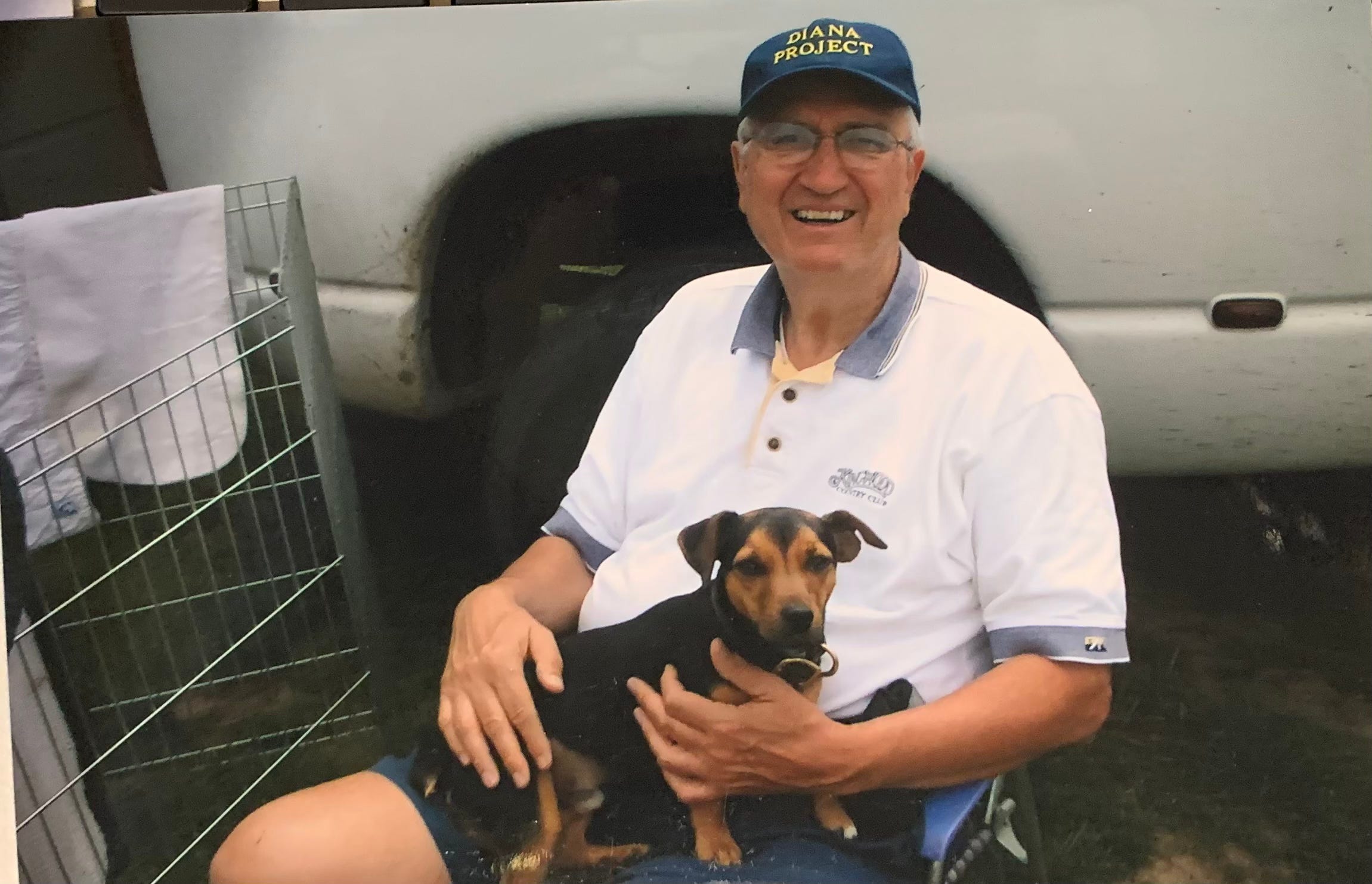
Despite the monumental loss, I did find comfort in the fact that Dad died at home. In essence, he died with dignity. Not once in his lifetime did he spend the night in a hospital, and unlike his own father, he didn’t die in one either. He wasn’t sick or injured, tended by strangers in a strange bed, and doped up on medication, and he didn’t have to rely on a bedpan to relieve himself. No one ever showered Dad, but himself, and he never needed any help in the bathroom, as in, he never got stuck on the toilet. Dad couldn’t drive anymore, but he had an amazing network of friends who showed up every week and took him to his lunch group, the Romeos, or “Retired Old Men Eating Out.” I don’t think it gets much better than this when it comes to the business of dying. Remembering this brings some peace to the memory of his passing, and I hope it will for our neighbor’s daughter, too.
Do you ever wonder what happens after we die?
Why do you believe what it is that you believe?
Christmas night—so conceivably 24 hours after my father passed—I was barely asleep on the downstairs couch with both dogs when a loud noise in the kitchen woke me. A drawer had slammed. The dogs woke too, but they didn’t bark. They stared silently toward the kitchen from their places intertwined with my legs. The noise gave me chills, and the hair on the back of my neck raised like a mohawk. The silence between us was as thick and heavy as mayonnaise.
Then the microwave beeped, as if someone was trying to start it. How did I know that was the start button? How did I know it was the knife drawer that snapped? Was my hearing that good I could splice one button from the others, one drawer from the rest of them? Maybe. But I have zero doubt I was right about both of these things. Some things you feel so deeply in your core that any opinions, doubts, or judgments slough off all by themselves, leaving exposed only the bare, naked truth. Tuukka, Bergy, and I sat up for a while, waiting for more distractions from the kitchen. When the silence settled once more, I stroked the dogs and whispered that everything was alright, that they could go back to sleep now. Just as I started to settle myself, a white light flashed out of the corner of my eye, passed the staircase by the floor, and shot out the pane-glass window. That was it. Dad was gone.
Ahh, the mysteries of living a human life.
Energy is neither created nor destroyed, so where does it go?
This weekend I am joining a friend to celebrate her dad. He passed shortly before my own father did, back in 2022. She would like to spread some of his ashes in a special place and asked me to come along. I feel honored to be invited. I’m looking forward to the excursion and to celebrating both of our dads.
It seems like it’s that time in life for me and for others in my age range—the 50s. When we all went to college at the same time, I didn’t think anything about it. When we started marrying at the same time, I was too busy buying bridesmaids’ dresses to realize there are many seasons to life, both collectively and personally. Then came some babies, but I have to admit that, like me, most of my friends chose not to have kids. I think our chosen labor of love was horses instead. But then there was the wave of divorces, and that’s when I began to realize we are all part of a season, depending on our time and place in life. Right now, along with my Gen X brethren, I feel like I’m in the season of monumental loss. Middle age is the reason we notice birds now, wear comfortable shoes, and reflect more on a past whose future has ended. Losing a father is the end of an era. Mitch Albom says it best: I love you everyday. And now I will miss you everyday. Cheers to all the dads.
Beautiful piece, Jenn!
This is a beautiful essay. Thank you for sharing it. I'm so sorry for the loss of your father and your neighbor. It stirs up pain and longing, I'm sure. While I didn't have the same experience when I lost my father over four years ago, your post made me think of that time anyway. Dad was so sick (a four year bout with cancer), and we knew we would lose him, but it shocked me then, and still shocks me now, how often my whole family thinks of him, and how much his death has continued to impact our lives. We have to expect such loss as GenXers, and yet, it's impossible to anticipate how it will feel. ❤️