
The Rescue Dog
Finding Tuukka

Three years ago, I drove from D.C. to South Carolina to pick up a dog. The woman who took in the dumped dog was a friend of a friend. She told me he looked about a year old and seemed polite, etc. I wouldn’t say she gushed about the dog, but I took note of the fact that none of her descriptions hinted at anything negative.
I asked the crucial question: By chance, have you left him alone in the house before?
Yes, she said.
And he was fine? I probed further.
Yes, he seemed so.
So…no separation anxiety that you noticed?
None that I could see, she said.
Honestly, the match hinged on this single question. If you’ve never had a dog with separation anxiety, let me try to explain. Having a dog with separation anxiety means the back door might become raked by claws and teeth alike, remodeling it, and window blinds could get chewed in half. God forbid the dog might accidentally lock themselves in the bathroom (by shutting the small door) and chew a hole in said door trying to squeeze through it.
Having separation anxiety could mean you might begin to take the dog with you…everywhere. It might also mean that while you’re shopping in Home Depot one evening, the store makes a public announcement from the loudspeaker that the owner of a black pick-up truck should come to the front to pick up their dog that was found stuck halfway in and halfway out of the cracked window.
Having a dog with separation anxiety might mean you find a chunk out of your steering wheel, or your seatbelts chewed in half, returning to your car after a Sunday morning church service. The car may not even belong to you, the dog owner, but to your parents instead. Whoops.
Having a dog with separation anxiety means you eventually lock them out of any dwelling when you have to go somewhere, so they can run free on the farm, but first, you will have to beat them down the gravel driveway because they insist they are coming with you.
Why didn’t we kennel the dog? It’s one thing to come home and find your stuff destroyed, and it is something else entirely to come home and find your dog’s face half destroyed and the kennel beat to shit. I wanted to try medication to curb the poor dog’s anxiety, but my spouse at the time didn’t. He preferred to let the dog do what he wanted, go where he wanted, using the hundreds of acres of farmland as a buffer. Except that eventually wasn’t enough to contain them. The dog figured out how to go from the farm back home, about a five-mile trek, that crossed a highway with a 50-mile per hour speed limit. That’s the problem when you leave separation anxiety unchecked: the dog keeps changing the rules as to what they find acceptable and what no longer is.
“Undecided.” That was the name written on the vet’s paperwork for the dog in South Carolina. According to his keeper, he passed this hurdle with no problem. He was also a good age—not a total puppy—but still young enough to want to go running with me most days.
I hadn’t had a dog in four years, since Cracker died. Cracker’s demise was swift. He was 15 and a half when I noticed a lump in the scruff of his neck. Two weeks later, he was gone. The lump turned out to be a mast cell tumor. “Not cancer,” the vet told me, but “acts just like it.” It felt like one and the same. This dysfunctional immune response was very aggressive in a short period of time. The lump appeared, the size of a table-tennis ball, and the next thing we knew, Cracker was struggling to breathe. Humane destruction was the kind option. Cracker was my dog of a lifetime; my sidekick; my best buddy; my business partner; riding partner; horse show companion; you name it, Cracker did it or was there. I still owe a debt of gratitude to the dog who got me through fifteen years of tumultuous trials and tribulations. There was a lot of dog stuffed in that fourteen-pound body, but his heart was even bigger than that.
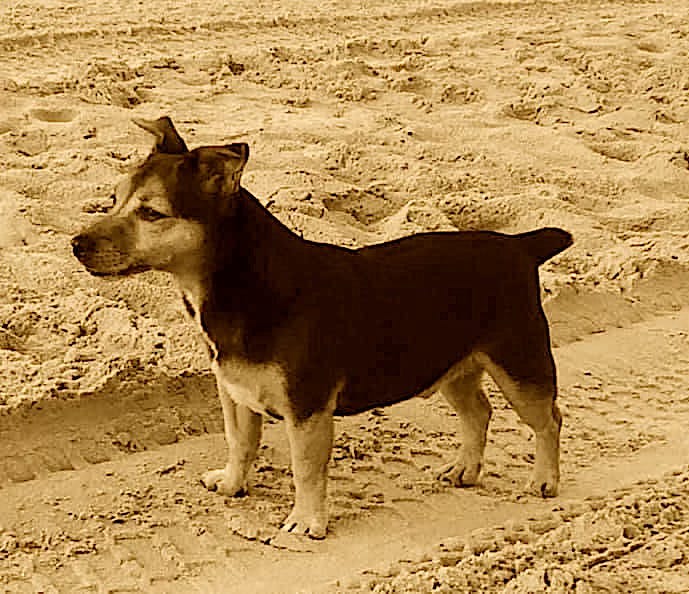
I wasn’t keen to have another dog right away, but this was especially true living in an apartment in Washington, D.C. In my opinion, that kind of urban dwelling requires a certain type of dog with a certain physique (small) and a certain disposition (relatively quiet).
Only a year and a few months after Cracker died, COVID broke out. The world was sheltering in place and/or working from home. The animal shelters were emptied, and pretty soon, one even had to queue up in order to foster a dog. I was one of those people working from home who thought it would be a good idea to foster. Because we were in an apartment, I focused on senior dogs in need. A friend shared a rescue org, and I filled out the application and was offered an interview.
A girl called me, and we chatted about dogs. She said she would check my recommendations, and didn’t mention the fact that my friend who hooked me up with the rescue was a small vet who was friends with the founder/owner of the rescue, but I didn’t think much of it. I got a call-back a couple of days later. The girl said she had concerns because my primary vet told her Cracker’s vet record was spotty, with big gaps in care, i.e., vaccinations. The girl said she wasn’t sure if she was comfortable giving me a dog.
I have never felt so much shame in my entire life. I was a recently retired equestrian professional who had dedicated twenty-five years of her life to horse care and their well-being. Dogs were a huge part of that in that timeframe. My entire identity was wrapped up in animal care and communication at a high level. Our mantra every day was “the horses come first.”
Being judged on the one thing I was truly good at and cared about made me feel like a total piece of shit. My imposter syndrome flared from syndrome to fact. Yes, there were gaps. This was due to financial constraints. The only consistency in compensation in the horse world is inconsistency. But after the age of five, I didn’t worry so much about Cracker’s annual vaccinations. He was good to see the vet every third year, and I knew I was lucky to get away with it, due to the benefits of our lifestyle. I cried on the phone trying to explain this.
This wasn’t my only weird experience with a rescue. In 2011, I applied to adopt a greyhound. The couple drove 45-minutes to the farm to interview me.
What do you feed? they asked.
Iams, I said.
Well…[X] would be better, they said.
Okay….
What kind of water do you have out here?
The farm runs on a well.
Hmm, bottled water would be best, they said. What about a fenced yard?
I showed them to my permanent round pen. It was three-board fenced and about 24 feet in diameter. I did tell them the entire 75-acres was fenced, but that fell on deaf ears. We went out to look at the round pen. I signed a piece of paper that said Darby, the four-year-old greyhound I adopted, would always be contained or on a leash. The first day I had her, I tied her leash to the stall door while I went to catch a horse to bring into the field. When I came back three minutes later, the leash was chewed in half. Cracker looked up at me and rolled his eyes like, “What were you thinking?”
After that, I left her in the barn apartment until I could walk her between rides. Eventually, I let her hang out in the barn with the leash attached, dragging it around. It helped that Cracker had excellent recall, but one day I unclipped the leash, and that was it. Darby had our 75 acres to run on, and she also had the neighbors 150-acres, because we left one gate between us open. The fact was, she wanted to be where everyone else was. She might chase a deer—scaring the daylights out of it—but she’d roll back to the barn as soon as the deer jumped the fence line.
That’s what the rescue rep didn’t know. She didn’t know that Cracker and, eventually, Darby, spent every minute with me or someone they knew. In their entire lifetimes, they never once spent the night at a commercial kennel. Their days were spent hacking with me around the farm or to the ring, sunbathing at their leisure, or curling up in the tack room on their beds. As far as dogs’ lives go, theirs were pretty amazing. But maybe if the rescue rep knew all of this, she wouldn’t have cared anyway. What was their most important prerequisite to qualify as an adopter or foster parent? A fenced yard? A solid vet record with a history of annual vaccinations?
The rescue granted us the fifteen-year-old miniature poodle needing a place to land. The young woman then sent me a friend request on Facebook. About a month later, she made a post asking for an oral surgeon for her and her daughter. She needed someone who would work with a patient who didn’t have insurance. I have to admit, my first thought was, “Well, isn’t that rich of you? How ironic.” Who was she to judge me? I thought she was an irresponsible parent. Why were her financial constraints for a child more acceptable than mine for my dog? This is the problem with exercising judgment. It spreads like wildfire. If she had shown me a little more grace, I would have extended it to her right off the bat, too.
But I’m also a massive hypocrite as I write this. I have to tell you that I’m a hard ass. I think there is a certain threshold of care that qualifies as good. Honestly, I feel like the basics—food, shelter, and water—are highly subjective and debatable as to what qualifies as acceptable. Is an igloo on a 30-degree night an acceptable shelter? Is remembering to fill your dog’s water bowl twice a week enough, let alone remembering to feed them regularly? Consistent basics are non-negotiable for me, but alone, in my opinion, they don’t qualify as good care.
Good care is spending time with your pet every day. It requires patience, forgiveness, and communication. Good care means a safe place to play and exercise most days. There is a homeless man who sits at the same metro station in D.C. with his dog. For several years now, I see him there when I visit, and I think, this dog has it better than a lot of dogs who are neglected, abused, and worse. So what qualifies as good care, not just adequate, let alone what does it mean to show your dog love?
Dogs are struggling in the south. My experience is anecdotal, but true nonetheless. Every winter, I saw it in Aiken, South Carolina, when we relocated the horses there. Loose dogs trotted up and down the main roads and the back roads. Cardboard boxes of puppies would magically appear on the edge of someone’s farm. I waited and waited for it to happen to me. How could I say no? I wouldn’t have been able to, which was the point. I always wanted another dog, and I still do. But it never happened. It always happened to someone else. Back north those dogs would go, in March, with their chosen snowbird.
Here in Houston, the problem is just as bad. New dogs are showing up all of the time. Passersby post them on social media, try to network them, but the shelters are full and so are the rescues, and fosters are tapped out. Russ and I tried to help a couple of dogs out last year, but it was really difficult, already having two big dogs of our own. We had to keep everyone separated, which meant the two dogs stayed in our backyard with a big covered porch. But they were so skinny, they could fit through the fence boards between the driveway and the porch, and they did. Come trash day, they slipped through the fence in the pouring rain to pillage our neighbor’s trash bags at the end of their driveways, ready for pick-up that morning. The street was a mess.
I planned to keep them for a week, then take them to the shelter on “intake” day, but the day before that, the shelter announced on Facebook that it wouldn’t be open after all. I was at a loss as to what to do. One house next door to us was recently sold and sat empty, but the neighbor on the other side of us heard them bark all night for a week straight. In the meantime, I called the number on the dog that was wearing a collar and left a message. Two days later, the owners called back and came to pick them up. Russ chastised me for calling them because the dogs were painfully skinny and obviously had been on the run for at least a month. Needless to say, when I saw those dogs pop up on social media again this year, I knew he was right. So what is adequate care again? Remind me, because I’m not confident that I know.
I think it’s fair to say that my experience with rescues has been clouded. I hate admitting this, but because of it, I overlooked them when searching for a dog. When Tuukka Raskal’s face showed up in my Facebook feed (as we quickly named him after Bruins’ goalie Tuukka Rask), with a history of known behavior, and an ideal age for our lifestyle, I was more motivated than ever to pursue him. Before we even met, Russ and I had shelled out over six hundred dollars on vaccines and neutering him. We boarded Tuukka at a friend’s facility for a week so his “finder” could get back to her normal life after keeping him for almost a month. I drove nine hours, stayed in a hotel room that night, picked Tuukka up the next morning, drove halfway home, and spent the night in another hotel room before making it back to the city by lunchtime the next day. All in all, it was a lot of expense and logistics to jump through for one random dog, when there were so many in need around us, but I saw this as plucking one from the south, where loose dogs were ubiquitous. I had hoped it would happen by serendipity all those winters ago, but it never did.
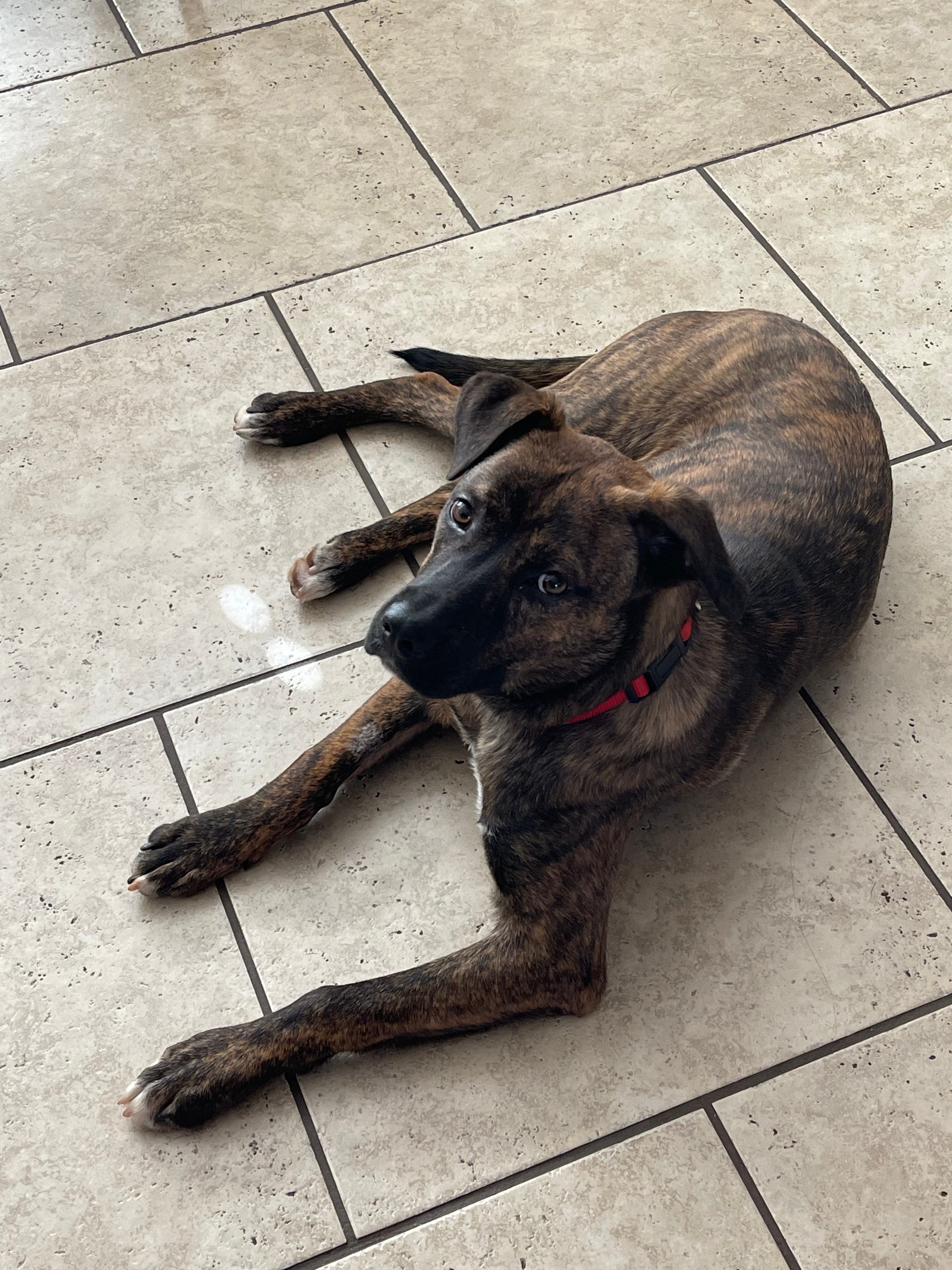
Tuukka just turned four on March 15th. We gave him this date for his birthday, tacking on three more months than what the vet estimated, because after having Tuukka for a month, we decided he couldn’t possibly be more than eight or nine months old. For starters, he gained twenty pounds in the first month alone. Sure, he had some weight to gain, but this was a growth spurt, too. He jumped from 50 pounds to 70. And once he got to know us and trust us, we noticed Tuukka really played like a juvenile pup.
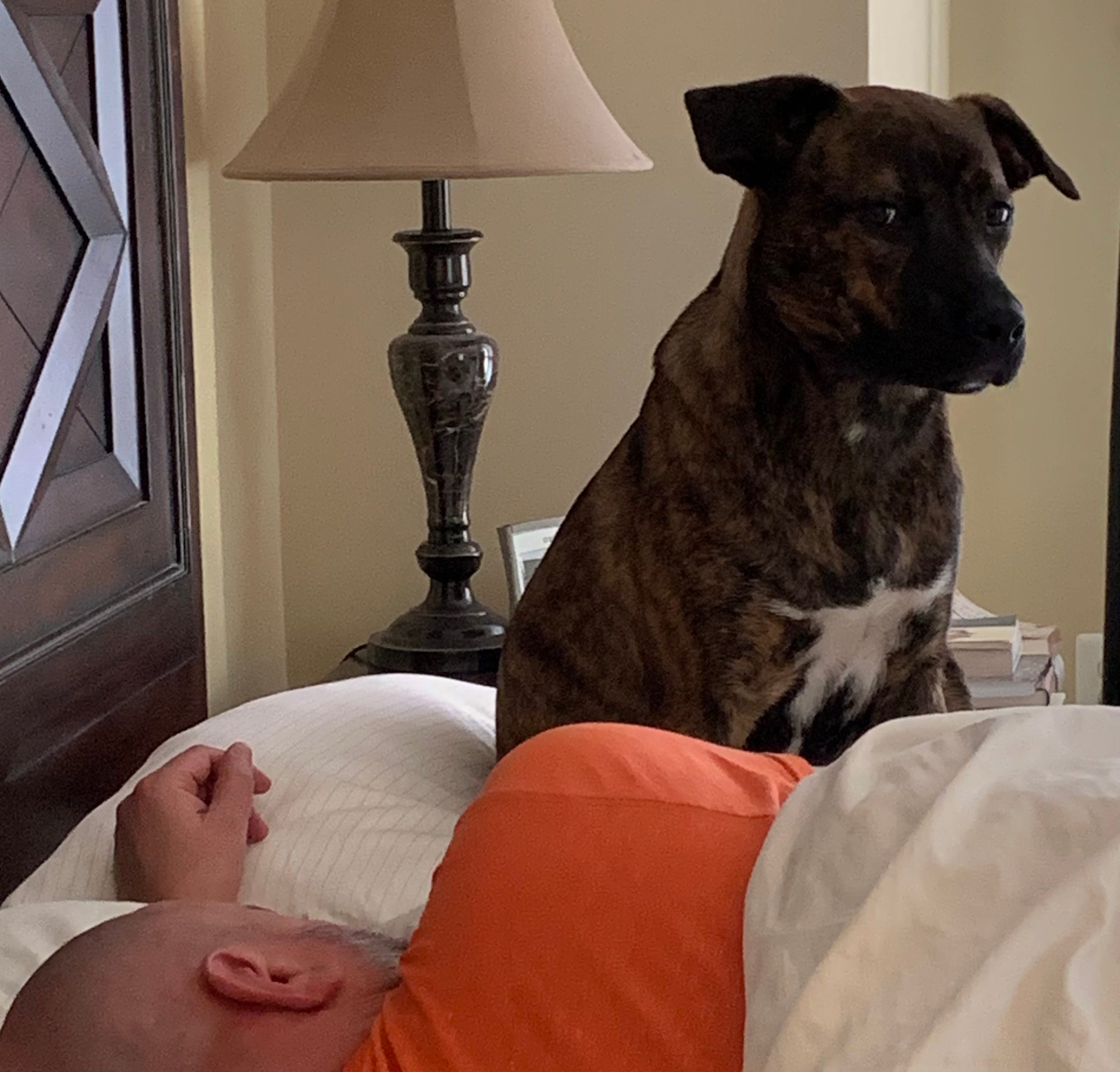
I had a laugh/tussle with Henny Hiemenz last week. He was speaking about shelter dogs and his experience volunteering at the shelter. He remarked regarding dogs that “being ‘traumatized’ is a heck of a lot better than being inherently ‘bad.’” I grant the fact that Henny was speaking in generalized terms for the sake of his point, but the word ‘bad’ used to label any animal always triggers a defensive reaction in me. I pushed back. I said I’d take a bad dog over a traumatized dog any day of the week. Why? Because I don’t think there are bad dogs, only misunderstood ones, or ones ruled by their genes that happen to clash within the limits of domestication.
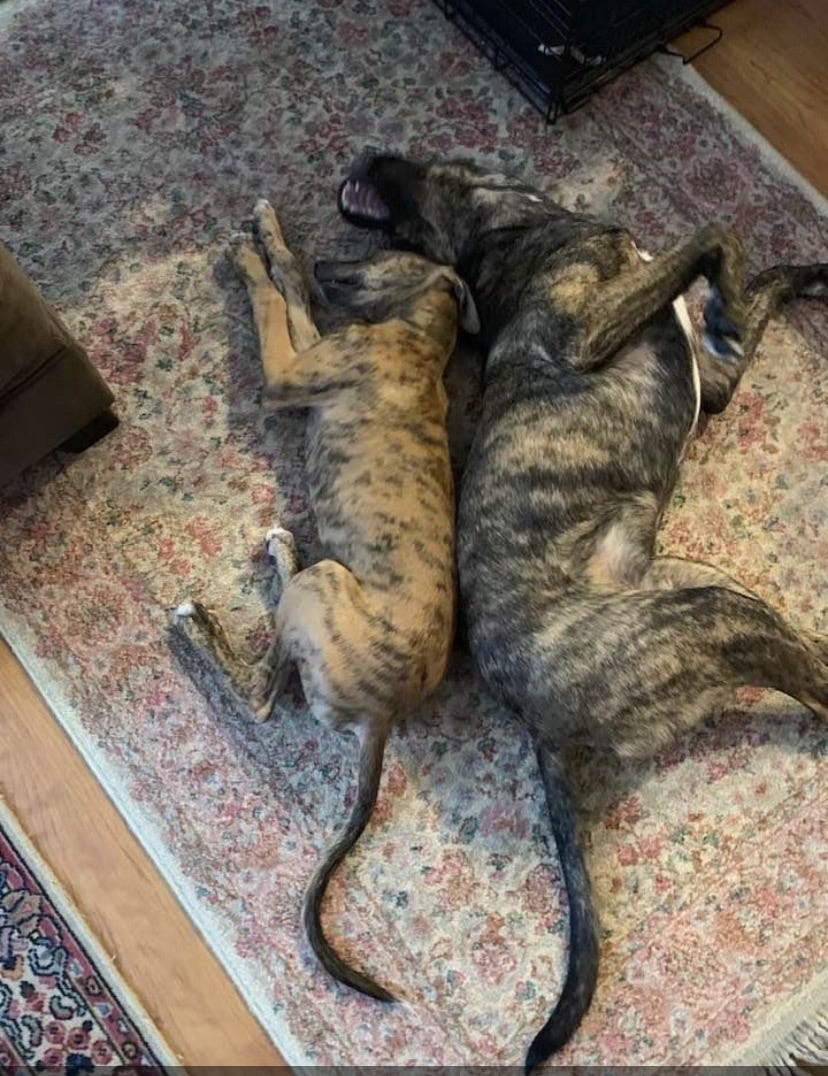
Traumatized dogs, on the other hand, are usually the result of human interaction of the nefarious kind. For instance, when we first got Tuukka, Russ and I would walk through the door, into the house, to a cowering Tuukka. The first few times I took the trash bag out of the bin, he cowered and tried to hide. That is a traumatized dog. Bergy, Tuukka’s sidekick, was a ‘bad’ puppy when we got him. He chewed furniture, drywall, and shoes. But that isn’t quite right, is it? Bergy was just a puppy who needed a lot of stimulation, exercise, and attention. There’s no such thing as a bad dog, only a misunderstood one.
I can’t believe I went four years without a dog between Cracker and Tuukka. I vow to never do that again. The boys, Tuukka and Bergy, bring incredible amounts of joy into our lives. Once, on the tail end of COVID and before we had Bergy, I took Tuukka to the D.C. office with me. Dogs weren’t allowed in the building, but I snuck him onto the fifth floor using the service elevator. The suite was empty, and I did my work with Tuukka curled next to my desk. When we left that afternoon, I took the service elevator once more. When the doors opened at street level, there stood one of the front desk personnel. She looked at the dog, I looked at her, and then she looked at me. “Is that a service dog?” she asked. Unable to think fast on my feet, I blurted, “No, but we were just leaving.” I scooted out of the building with Tuukka leading the way. He may not be a service dog, but a rescue dog Tuukka was. The question remains, who rescued whom?
What a great story! The love and compassion that you show your dogs is so genuine. Any dog would be so lucky to live with you ❤️❤️🐾🐾
Cracker! I can’t believe I’ve never asked you before about that name. Now I know 😍
The vast majority of dogs at my shelter come from the South. It’s really sad, and unfortunately makes me think less of the entire South. Which I know is not fair.